What we are doing
- In order to make effective use of valuable resources in a sustainable manner, we will make continuous devise and improve ways to contribute to environmental protection.
- CSV Goals (Creating Shared Value)
-
 Climate Change
- GHG reduction, scopes 1 and 2 (vs. 2015): 50% (2030)
- GHG reduction, scope 3 (vs. 2015): 30% (2030)
- Net-zero greenhouse gas emissions (target year: 2050)
- 100% renewable energy (target year: 2050)
- Policy
- Environmental Policy
- TCFD/TNFD
- TCFD
Initiatives for Greenhouse Gas Emissions
We believe that sustainable growth requires balancing the reduction of environmental impact with business growth. We believe that sustainable growth requires balancing the reduction of environmental impact with business growth. The CCBJH Group aim to contribute to the mitigation of climate change by reducing greenhouse gas emissions across our entire business, including in the procurement of materials, production, logistics/transportation, and sales. We are working toward our non-financial targets outlined in the CSV Goals, including reducing Scope 1 and 2 GHG emissions by 50% and Scope 3 by 30% by 2030 (compared to 2015 levels), and achieving net-zero GHG emissions by 2050.


Climate Change Initiatives
CCBJI completed an automated distribution center, “Akashi Mega DC,” with Japan’s largest storage and shipping capacities and started operation in July 2022. Warehouse operations such as sorting, picking and inventory storage previously carried out at each sales center will be gradually integrated into the Akashi Mega DC. Targeted sales centers, will become cross-docking type, with no inventory to build an efficient network that delivers products end-to-end to customers and vending machines.
The Shinsei logistics network optimization project is driving the strategic transformation of our logistics as a whole by introducing new distribution centers—primarily mega distribution centers and others such as the Hakushu and Kumamoto warehouses—and reorganizing as well as consolidating hub warehouses and sales centers to streamline complex supply chains. Through these efforts, the CCBJH Group is optimizing its supply chain to resolve a variety of issues, such as reducing their environmental impact.
※The calculation of greenhouse gas emissions at the company level is consistent with the greenhouse gas protocol standard (company emissions and company value chain; Scope 3 standard), a best practice standard for company greenhouse gas emissions administered by the World Business Council for Sustainable Development (WBCSD) and the World Resources Institute (WRI).
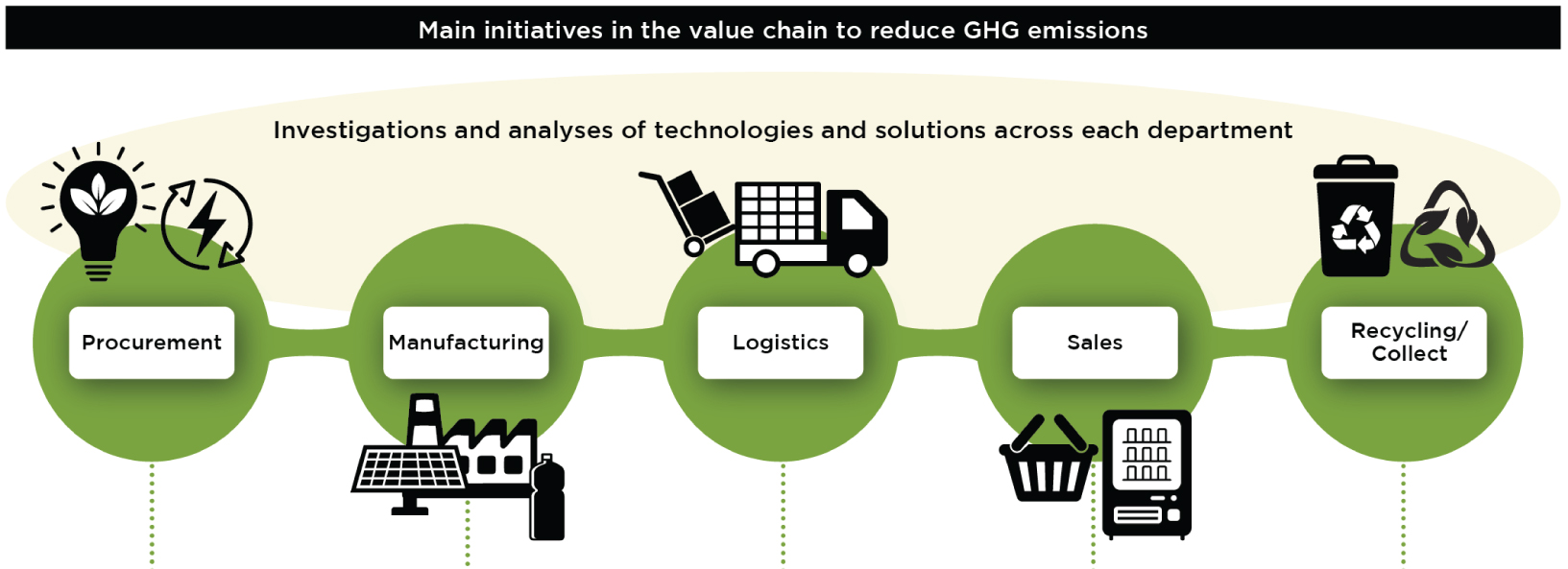
Procurement
Introducing sustainable materials
Identifying and employing renewable energy sources
Purchasing green electricity certificates
Manufacturing
Improving energy efficiency across all plants
Developing energy efficient manufacturing lines
Installing solar panels at plants
Manufacturing labelless products
Logistics
Mega DCs to optimize supply chains
Streamline transport volumes and fuel consumption through small-capacity preform loading ※1
Implementing modal shifts
Efficient sales and delivery routes reduces number of vehicles used and fuel consumption
Sales
Deploying peak shift vending machines ※2 reduces energy requirements by up to 95%
Introducing sales equipment that effectively reduce power requirements and greenhouse gases
Recycling/Collect
Partnerships with business and local governments to create a new PET bottle resource circulation system
100% recycled coffee grinds and used tea leaves
Promote resource recycling through education campaigns to encourage sorting used product containers
Promoting horizontal recycling initiatives, including “CAN to CAN” and “pallet-to-pallet”
※1 Preform is the prototype of a PET bottle like a test tube
※2 Peak shift vending machines are vending machines that reduce power consumption during the day by centrally cooling at night.
Production Initiatives
At our plants, we are actively adopting new processes and the latest technology for improving energy efficiency. We are striving to reduce the greenhouse gases produced and fuel oil used in our manufacturing processes through measures such as introducing cogeneration systems that can create both electric power and heat from a single energy source, installing insulation and heat exchange systems that can effectively keep energy losses to a minimum, and converting from the use of fuel oil to natural gas.
(Energy Use Ratio)
per liter of product
year on year)
Initiatives in Logistics Transport divisions
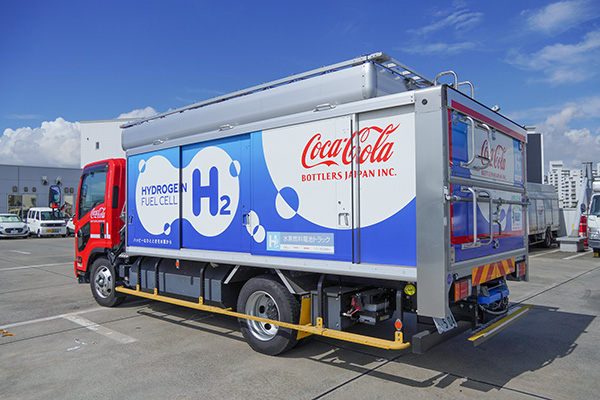
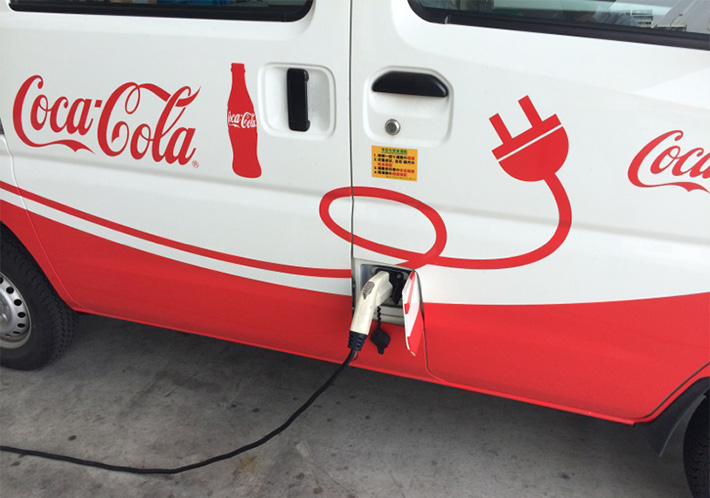
For site-to-site transport between plants or warehouses, we are accelerating efforts to improve the load rate using larger vehicles and continue to utilize modal shift for further transport efficiencies. We are also streamlining delivery routes to customers, pushing eco-driving, promoting the replacement of fuel-efficient vehicles such as hydrogen trucks, electric vehicles and hybrid vehicles, and using smaller sales vehicles to reduce greenhouse gas emissions in the entire Group.
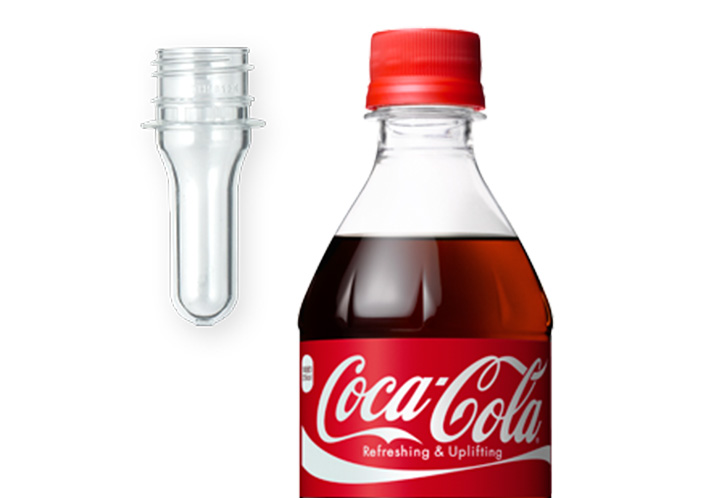
Efforts to Reduce CO2 Emissions
The model for PET bottles is called a “preform”, and they can be transported in large volumes due to their small size.
This enables a reduction in fuel usage and significant decreases in nitrogen oxide and carbon dioxide emissions.
Sales Initiatives
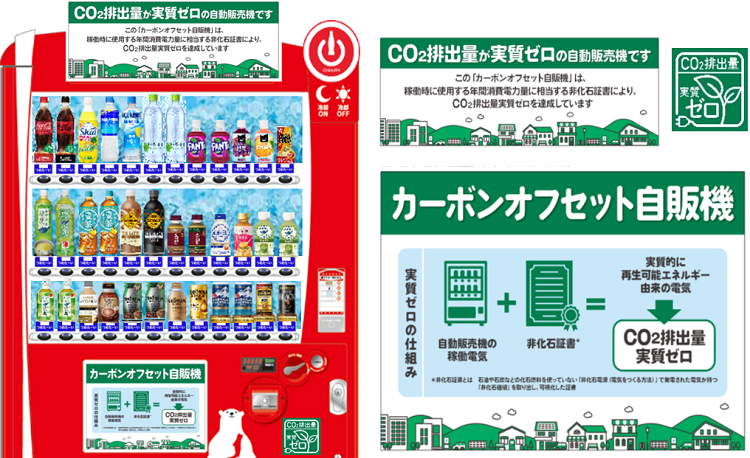
Since March 2023, we started to introduce carbon offset vending machines that effectively reduce operational CO2 emissions to virtually zero, and we have increased the number of machines to over 970 as of March 2025. With a feed-in tariff (FIT) non-fossil certificate*2 equal to the annual electricity consumption of the vending machines that we support the acquisition of, the machines installed on our customers’ sites are considered to be using electricity generated from renewable energy sources, helping to offset their CO2 emissions. Our goal is to support our customers’ efforts toward a decarbonized society by expanding carbon offset vending machines that are familiar to general consumers.
Other Initiatives
Endorsement of the Leading Tenant Action Plan
We have endorsed the Leading Tenant Action Plan, a list of decarbonization initiatives by tenant companies compiled by the Ministry of the Environment.
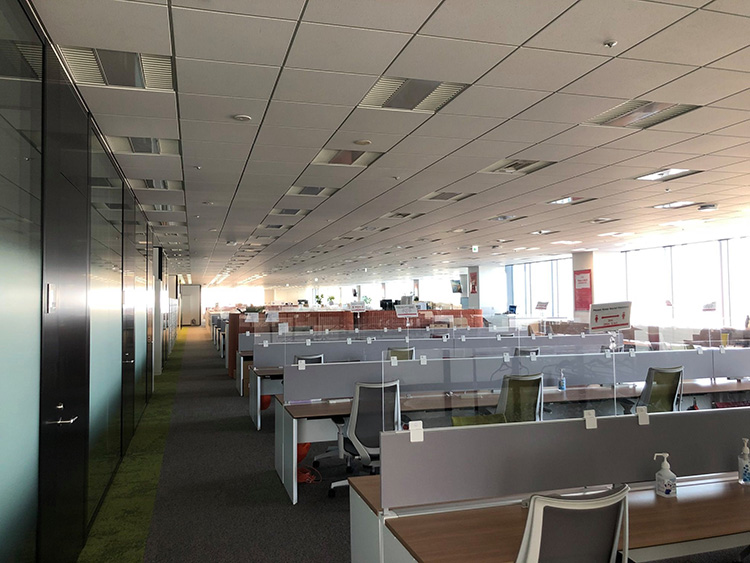
The Leading Tenant Action Plan is designed to promote the reduction of CO2 emissions from office buildings, which account for a high percentage of greenhouse gas emissions (GHG) in Japan, and compiles initiatives that building tenants have started to achieve decarbonization, such as shifting to ZEB ※.
In the future, we will promote initiatives to decarbonize our workplace, such as by conserving energy and utilizing renewable energy, in cooperation with building owners and in line with this Action Plan.
※ZEB is an abbreviation of “Net Zero Energy Building”.
This refers to buildings that aim to reduce the annual revenue and expenses related to their primary energy consumption to zero, while also providing a comfortable indoor environment.
In the future, we will promote initiatives to decarbonize our workplace, such as by conserving energy and utilizing renewable energy, in cooperation with building owners and in line with this Action Plan.
※ZEB is an abbreviation of “Net Zero Energy Building”.
This refers to buildings that aim to reduce the annual revenue and expenses related to their primary energy consumption to zero, while also providing a comfortable indoor environment.
Endorsement of the TCFD Recommendations
In February 2022, we endorsed the recommendations by the Task Force on Climate-related Financial Disclosures (TCFD) and participated in the TCFD Consortium, a forum for discussion among the supporting firms and financial institutions. Based on these recommendations, we will analyze the financial impact of climate change-related risks and opportunities, consider measures to address them, and strive for enhanced information disclosure from the perspectives of the core elements of governance, strategy,

Participateing in the GX League
The GX League was established to foster collaboration between companies taking on the challenge of achieving sustainable growth in present and future society. It aims to accomplish carbon neutrality and social transformation by 2050 through partnering with both the government and academic institutions. The goal of the GX challenge is to create a society where companies can reduce greenhouse gas (GHG) emissions while receiving objective evaluations and achieving growth within an interconnected cycle of economy, environment, and society. The GX League commenced full-scale activities in FY 2023.
We believe that our group's activities are in line with the GX League's mission, and we have officially participated the GX League to pursue this initiative.

Participation in and support of the Japan Climate Initiative
In March 2022, we endorsed and participated in the declaration of Japan Climate Initiative (JCI), a network of companies and local governments in Japan promoting climate change action. We will continue to strive to achieve the GHG emissions reduction targets set by the Coca-Cola System in Japan by 2030.
Utilization of Renewable Energy
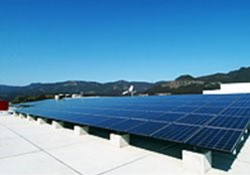
On-site PPA model*1 solar power generation introduced at Hiroshima Plant
We installed on-site PPA model solar power generation equipment at our Hiroshima Plant (Hiroshima Prefecture), and began operations in September 2024. This is the first time we introduced solar power generation using the PPA model at one of our plants. The electricity generated by this equipment (renewable energy) will be purchased by the Company from the PPA operator and used as electricity for the manufacturing lines at the Hiroshima Plant. This is expected to reduce GHG emissions by approximately 110 metric tons per year. At our plants, we are using hydroelectric power and purchasing Green Power Certificates, which are issued by third-party organizations to certify that electrical power has been generated from natural energy sources. We will continue to promote the use of renewable energy in the future.
Solar panels were installed at the plant tour facilities of the Tokai, Hiroshima and Ebino plants to supply electricity. Transparent solar panels were installed at the Hiroshima plant completed in October 2020.
Hakushu Plant's "Furusato Hydropower Plan" Renewable Energy
Since 2019 and the conclusion of a contract for the Furusato Hydropower Plan offered by Yamanashi Power Plus—a power supply brand jointly operated by Yamanashi Prefecture and TEPCO Energy Partner, Incorporated—our Hakushu Plant has been utilizing hydroelectric power.
Yamanashi Power Plus "Furusato Hydropower Plan" is an initiative to enhance the environmental value through the realization of zero CO2 emission achieved by limiting the source of power supply to only the hydroelectric power generated in the hydraulic power plant run by Yamanashi Prefecture Enterprise Bureau. The reason why this plan can eliminate the CO2 emission that is normally associated with the use of electricity is because hydroelectric power is a renewable type of energy that does not emit any CO2 when it is generated. As a company that is working proactively to reduce the environment burden, CCBJI agreed to cooperate and became a certified enterprise in support of this initiative. With the conclusion of the power supply contract, CCBJI pays an extra 1 yen per kilowatt-hour as environmental added value in addition to the regular electricity charge. Part of the proceeds from this extra payment will be used to fund environment conservation projects of Yamanashi Prefecture.
Through this initiative, we are working to reduce environmental impact by eliminating CO2 emissions associated with electricity use.
Tama Plant "Tradable Green Certificate"
The "Tradable Green Certificate" is a system certifying that it is electricity generated from natural energy by a third-party certification organization. We pay the electricity charge (environmental added value) in addition to the regular electricity charge and use it as power for Tama Plant.