At Coca-Cola Bottlers Japan Holdings Group (“the Group”), we believe that respect for human rights is a fundamental principle of our corporate activities and supports the sustainability of local communities. We promote initiatives to uphold and respect human rights throughout our business activities.
Human Rights Policy
The Group has established a Human Rights Policy to ensure that its business activities comply with internationally recognized human rights principles, including the United Nations’ Universal Declaration of Human Rights and the International Labour Organization’s (ILO) Declaration on Fundamental Principles and Rights at Work.
Based on this Human Rights Policy, we work to address human rights issues both globally and within Japan, and to ensure respect for human rights in our workplaces.
Governance Structure
Within the Group, human rights issues and risks identified through human rights assessments, supplier audits, internal reporting systems, and grievance mechanisms¹ are reviewed by the responsible internal departments, which determine appropriate response measures based on their significance and impact. Relevant departments are then instructed to implement corrective actions, and where necessary, responses are coordinated at the management level in collaboration with the ERM² Department.
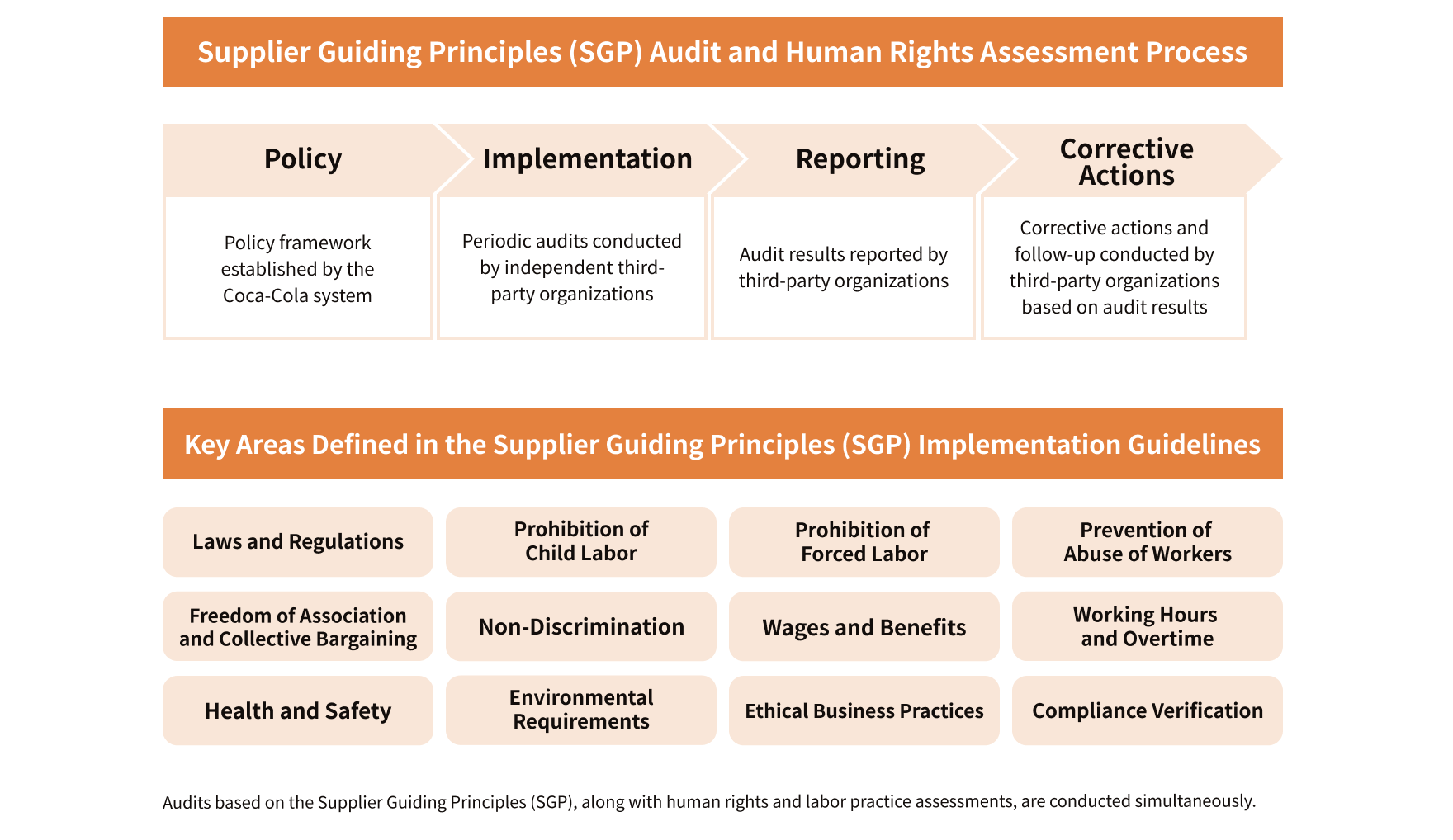
To identify potential adverse human rights impacts, the Group conducts human rights assessments and verifies suppliers’ compliance with human rights and labor standards through audits based on the Supplier Guiding Principles (SGP)³. The results are used as supplementary inputs for identifying and assessing human rights risks.
¹ A series of initiatives undertaken as part of human rights due diligence, including receiving complaints, consultations, and reports related to human rights; verifying the details; and considering and implementing corrective and remedial measures.
² Abbreviation for Enterprise Risk Management, a framework for comprehensively and cross-functionally identifying company-wide risks and utilizing that information in management decision-making.
³ Supplier Guiding Principles (SGP): The Coca-Cola system’s supplier principles requiring suppliers to comply with laws and regulations and adhere to standards related to human rights, environmental considerations, and responsible business conduct.
Targets
The Group has identified “Sustainable Supply Chain” as a material issue, defined as building a sustainable supply chain by addressing human rights and environmental issues, ensuring stable procurement of raw materials, and promoting fair trade and responsible sourcing. As part of our non-financial CSV Goals linked to this material issue, the Group has established a target for suppliers of raw materials and primary packaging to comply with the SGP. The Group achieved 100% compliance in 2025 and aim to maintain this level under its medium-term target for 2030 and long-term target for 2035.
Human Rights Due Diligence Framework
Based on its Human Rights Policy, the Group promotes a human rights due diligence framework that integrates the identification and assessment of risks with their prevention, mitigation, remediation, and disclosure. The Group uses information from human rights assessments, SGP-based audits, and grievance mechanisms in a consolidated manner to manage human rights risks and drive continuous improvement across the value chain.
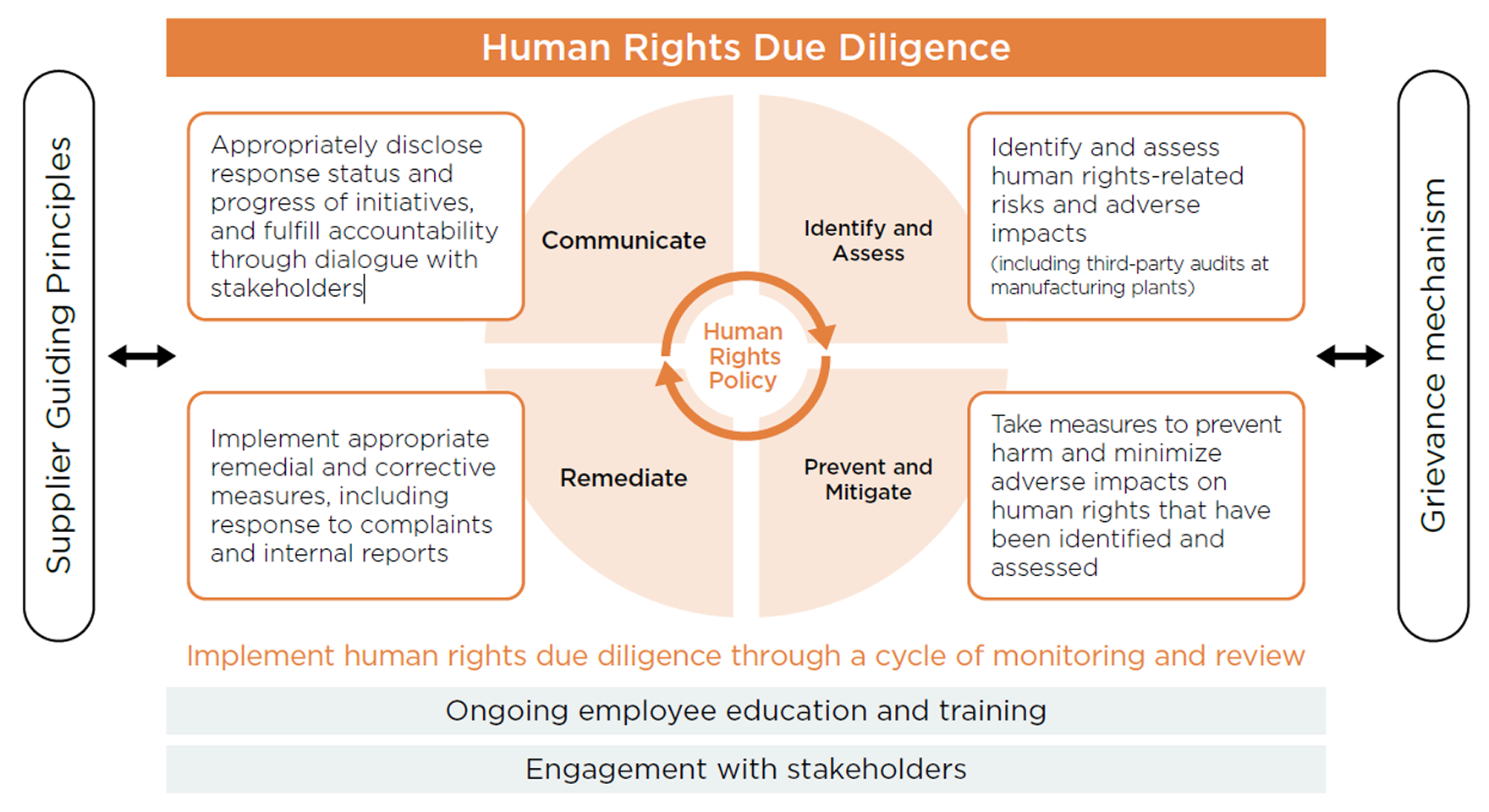
Identify & Assess: Identification and Assessment of Human Rights Risks
• To identify potential adverse human rights impacts, the Group conducts human rights risk assessments and evaluates risks among suppliers through SGP audits.
• In addition, the Group continuously identifies human rights issues and warning signs through internal reporting systems and routine monitoring activities.
Prevent & Mitigate: Establishing Preventive Mechanisms
• For identified human rights risks, the relevant internal departments assess their significance and impact, determine appropriate response measures, and instruct related departments to implement necessary process enhancements and corrective actions.
• Through company-wide education and awareness initiatives, the Group promotes respect for human rights, aiming to prevent risks before they occur and mitigate their impact.
Remediate: Remedy and Corrective Measures
• If adverse human rights impacts are identified, the Group responds through internal reporting systems and grievance mechanisms, and implements corrective actions while working to prevent recurrence.
• For significant human rights risks or issues requiring management judgement, responses are coordinated at the management level in collaboration with the ERM Department.
Communicate: Transparency and Dialogue
• The Group discloses its human rights policies, governance frameworks, and key initiatives to stakeholders through its website, integrated reports, and other communications.• The Group is committed to enhancing transparency and accountability in its efforts to respect human rights.
Human Rights Assessment Process
To advance respect for human rights and workplace standards as defined by The Coca-Cola Company, the Group conducts human rights assessments at its plants through independent third-party organizations, based on policies established by the Coca-Cola system. In addition, suppliers of raw materials and primary packaging are also subject to third-party human rights assessments.
Commitment to the SGP
To embed our Human Rights Policy throughout the value chain, the Group has adopted the Supplier Guiding Principles (SGP) established by The Coca-Cola Company.
The SGP sets out standards for ethical and responsible business conduct, including respect for human rights, and serves as the foundation for the Group’s procurement activities.
The Group expects all direct suppliers to understand and uphold the SGP, with a strong commitment to respecting human rights.
To support this, the Group has established the "Supplier Guiding Principles Implementation Guide" and the "Basic Procurement Policy," and works closely with suppliers to develop and implement processes that ensure legal compliance and ethical business conduct.
Audits Based on the SGP
To ensure compliance with the SGP, the Group conducts regular on-site audits by independent third-party organizations, focusing primarily on suppliers of raw materials and primary packaging. Based on the SGP Implementation Guide, these audits assess compliance with requirements related to human rights, labor practices, child labor, forced labor, and applicable laws and regulations. Results are communicated through an Assessment Summary Report (ASR). Suppliers found not to meet these requirements are subject to ongoing follow-up until corrective actions are completed.
In addition, the Group provides training on the SGP, related laws and regulations, and best practices to support suppliers’ understanding and continuous improvement. The Group reserves the right to terminate contracts with suppliers that fail to demonstrate sustained compliance with SGP requirements, even after corrective actions have been implemented.
Status of Supplier Audits
The results of these audits are used as reference points to identify human rights risks and inform response policies. In 2025, third-party SGP audits were conducted for 45 major suppliers.
Definition of Audit Scope
The following business partners, which play a critical role in ensuring product quality and safety, are subject to management and oversight.
・Suppliers of primary packaging materials and raw materials
・Manufacturing and maintenance partners for sales equipment that comes into direct contact with beverage contents
・Other key business partners with a significant impact on the Group’s operations
Audit, Corrective Action, and Engagement Process
In addition to conducting audits, the Group emphasizes improvement activities through ongoing dialogue with suppliers (capacity-building).
・Thorough implementation of corrective actions: Following audits conducted by third-party organizations, audit reports and corrective action requests are sent to each supplier, requiring reliable resolution of identified issues.
・Capacity development support: Annual training programs are conducted to deepen suppliers’ understanding and strengthen their compliance systems.
Monitoring and Governance
Based on audit results, the Group enhances the effectiveness of SGP operations by implementing a dynamic management system tailored to risk levels.
・Risk-based approach: Evaluations are based on the scores and significance of each audit item. When low-scoring items or significant risks are identified, measures such as follow-up investigations and shortening the interval before the next audit are implemented.
| Items | 2023 | 2024 | 2025 |
|---|---|---|---|
| Number of plants audited in CCBJI plants (third-party audit) | 14 | 11 | 4 |
| Number of suppliers with supplier plant audits (third-party audits) | 47 | 34 | 45 |
| Number of suppliers assessed for the Supplier Principles and Human Rights Policy (third-party audit) | 73 | 73 | 75 |
| Number of suppliers identified as high risk in assessment under Supplier Guiding Principles and Human Rights Policy | 0 | 0 | 0 |
| Compliance with Supplier Guiding Principles and Human Rights Policy (policy explanation, audit situation, response to noncompliance) | 100% | 100% | 100% |
Internal Awareness Activities
To deepen the understanding of respect for human rights, we conduct tier-specific training, e-learning, and internal intranet awareness activities on compliance with human rights policies and labor standards laws, as well as promoting the use of annual paid leave. Through these initiatives, we aim to cultivate employees who take human rights issues seriously, show empathy, and always act from the perspective of others, thereby creating a vibrant and healthy work environment.
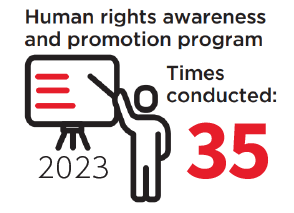
Training Implementation
Implementation of Integrity Training
To instill Integrity (acting with high aspirations based on sincerity and trust), which is one of the four values of our "Mission, Vision, and Values (MVV)," and to foster an organizational culture that does not tolerate misconduct, we conducted e-learning to deepen understanding of ethics and code of conduct.
Implementation Period: May to June 2025
Participation results: All 12,633 eligible participants completed the training (100% completion rate).
Objectives of the training:
・Reinforce the importance of acting with integrity and the behaviors expected by the company.
・Increase awareness of the Code of Business Conduct & Ethics.
・Promote employees’ responsibility to report misconduct or violations of standards.
Hierarchical Training Programs (Ethics and Harassment Prevention)
Comprehensive training programs covering the following themes are conducted across all organizational levels.
・Ethics and compliance: Understanding the standards and decision-making principles expected of Group employees
・Harassment prevention: Promoting clear behavioral guidelines to create a workplace that respects diversity, where employees can exchange opinions openly and support each other’s growth
Grievance Mechanisms
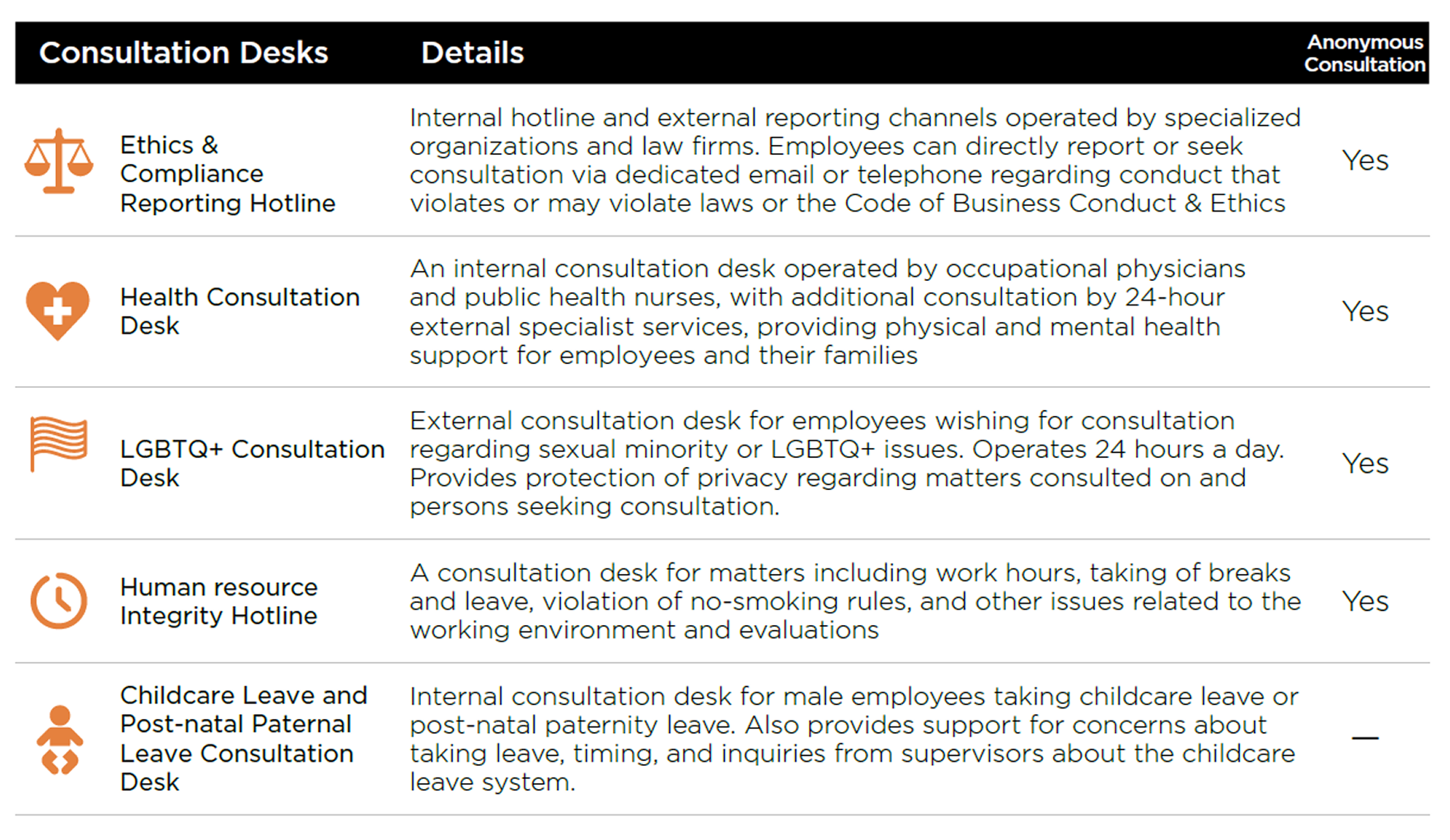
To ensure early detection and correction of legal violations, harassment, human rights violations, and other concerns, the Group has established multiple consultation and reporting channels (hotlines) tailored to the reporter and the nature of the issue.
Ethics & Compliance Reporting Hotline (Internal Reporting Hotline)
The Group provides consultation channels for all individuals involved in its operations, including contract employees, part-time employees, temporary staff, partner company employees, and freelancers. Reported cases are investigated, and if inappropriate conduct is identified, appropriate action and corrective measures are taken.
Specialized Reporting Hotlines
The Group has established systems that allow personnel with specialized expertise to respond promptly and appropriately to specific issues.
Frameworks and Operations to Ensure Effectiveness
To ensure that consultation and reporting systems function effectively, the following principles are defined and thoroughly implemented under the Group’s Code of Business Conduct & Ethics.
・Non-retaliation: Any disadvantageous treatment, including dismissal, demotion, or harassment resulting from reporting concerns or cooperating with investigations, is strictly prohibited. Violators are subject to disciplinary action in accordance with employment regulations.
・Confidentiality and anonymity: The privacy of individuals and the details of reports are strictly protected. The Group uses external reporting channels to enable anonymous reporting.
・Prompt investigation and corrective action: Upon receiving a report, the Group investigates promptly. If inappropriate conduct is confirmed, corrective measures are applied immediately and measures to prevent recurrence are implemented.
Human Rights Policy
We, Coca-Cola Bottlers Japan Holdings Group (hereinafter referred to as "the Group"), comply with international human rights principles aimed at promoting and protecting human rights, including the United Nations' "Universal Declaration of Human Rights" and the International Labour Organization's (ILO) "Declaration on Fundamental Principles and Rights at Work." Along with this, we establish the following Human Rights Policy and thoroughly ensure respect for human rights to resolve various human rights issues, including integration issues in Japan, and to establish respect for human rights in our workplaces.
-
Respect for Human Rights
The Group respects human rights. Respect for human rights is a core value for the Group, and our purpose is to help people increasingly enjoy their human rights in the communities where the Group operates.
This policy applies to the Group, entities owned by the Group, entities in which the Group holds a majority stake, and facilities managed by the Group.
We will build human rights due diligence to identify, prevent, and mitigate risks related to human rights for business partners in the Group's operations and value chain. If it is found that the Group's business activities cause actual or potential negative impacts on human rights, we will endeavor to prevent and mitigate them fairly and justly. If the Group's business activities are involved in causing negative impacts directly or through relationships with third parties, we will strive to remedy it or cooperate appropriately through proper procedures and work to prevent recurrence. -
Community and Stakeholder Engagement
We recognize our impact on the communities where we conduct business activities.
In conducting business activities, we collaborate with local stakeholders to listen to and learn from their opinions and reflect them in our business operations.
We will strive to engage in dialogue with stakeholders regarding human rights issues related to our business as necessary. -
Diversity and Inclusion
We value the diversity of the people we work with and the contributions they bring.
We promote equal opportunity and maintain workplaces free from discrimination and harassment. We are committed to maintaining a work environment free from discrimination or harassment based on race, sex, color, nationality or social origin, religion, age, disability, sexual orientation, gender identity or expression, political opinion, or any other status protected by applicable law. Recruitment, employment, placement, training, compensation, and promotion within the Group are conducted based on merit, performance, skills, and experience.
Regardless of personal characteristics or status, we do not tolerate any kind of disrespectful behavior, inappropriate behavior, unfair treatment, or retaliation. Harassment is unacceptable not only within the workplace but also outside the workplace. -
Freedom of Association and the Right to Collective Bargaining
We respect our employees' right to form labor unions without fear of retaliation, intimidation, or harassment.
We also strive to maintain constructive dialogue with labor unions and negotiate in good faith. -
Workplace Security
We are committed to maintaining a workplace free from violence, harassment, intimidation, and other dangerous or disruptive conditions caused by internal or external threats. We implement security measures for employees as necessary and strive to protect their privacy and respect their dignity.
-
Prohibition of Forced Labor
We prohibit the use of all forms of forced labor.
-
Prohibition of Child Labor
In accordance with applicable laws and regulations, we prohibit the employment of individuals under the age of 18 for duties that require hazardous work.
-
Labor Conditions
We operate our business in compliance with applicable laws and regulations regarding wages, working hours, overtime work, and benefits.
-
Healthy Living
We strive to provide transparent information on nutrition and a wide range of beverage options, enabling consumers to make informed choices aligned with a healthy lifestyle.
-
Guidance and Reporting for Employees
We foster a workplace environment where open and honest communication among all employees is valued. We are committed to complying with applicable labor and employment laws.
If you believe there is a conflict between the language of this policy and applicable laws, customs, or practices, or if you have questions or concerns regarding this policy or become aware of actions that may violate it, please contact your supervisor, the HR department, or internal/external ethics and compliance hotlines. In such cases, every effort will be made to maintain strict confidentiality. No retaliatory measures against employees will be tolerated for expressing concerns based on this policy. We will investigate and respond to employees' concerns appropriately and take corrective actions if violations have occurred.
The Human Rights Policy is linked to the Group's Ethics and Code of Conduct. -
Scope of Application
This policy applies to all directors, officers, and employees of the Group. In addition, Sections 3, 5, 6, and 7 require business partners who work with us to comply with this policy.
-
Addendum
This policy is revised and implemented effective from November 1, 2020.